
You can already picture it. Turquoise water a few steps from the door, white sand, your own stretch of shoreline.
What you may be less sure about is whether a foreigner can actually buy beachfront here, what it truly costs once you get past the listing price, and whether it's a sound place to put your money. All fair questions, and good ones to ask before you fall for a view.
The things that actually decide a good purchase include the smaller details: what it costs to own and insure after the purchase, how exposed the property is, and which island fits how you want to live. We'll walk you through everything and point you to real listings when you're ready to look.
Can Foreigners Buy Beachfront Property in The Bahamas?
Yes. Non-Bahamians can buy beachfront property with the same rights as citizens, and most buyers are surprised by how straightforward it is.
Under the International Persons Landholding Act, if you're buying a beachfront house or condo as a single-family home, you don't need permission in advance. You simply register the purchase with the Bahamas Investments Board after closing, which your attorney handles as part of the transaction.
There are cases that do call for a permit before you buy. A large undeveloped parcel of vacant land (broadly, five acres or more), or a property you intend to rent out or use commercially, needs a permit from the Investments Board first. If your beachfront plan is a holiday home for your own use on a normal residential lot, that permit step won't apply to you. If it's a rental, it will.
None of these are things you need to navigate on your own. Our BREA-licensed agents guide foreign buyers through registration and any permit steps and connect you with a Bahamian attorney to handle the legal side.
For the full buying process from offer to closing, see our guide on owning property in The Bahamas, and our piece on whether a US citizen can own property here.
What Beachfront Property Actually Costs in The Bahamas
When you buy beachfront property in The Bahamas, plan for a set of one-time costs at closing and a set of ongoing costs every year you own.
At closing, the two costs that fall to you as the buyer are the government VAT on the conveyance and your legal fees. VAT replaced the old stamp duty on property transfers, and while the rate is graduated for Bahamians, non-Bahamian buyers pay the top rate of 10% of the purchase price (per the BREA schedule; how VAT is split between buyer and seller is set by the sales agreement).
Attorney fees run around 2.5% of the price, plus VAT, following the Bahamas Bar Association's suggested scale. The agent's commission, by the way, isn't your cost as a buyer: under BREA's commission structure it's customarily paid by the seller.
Every year after that, you'll pay real property tax, insurance, and upkeep. Insurance is the one first-time buyers tend to underestimate on beachfront, so we’ll cover it in its own section below because it matters that much.
A quick word on the figures here: tax and fee rates change. Use these as a planning guide, and let us connect you with a Bahamian attorney to confirm the current numbers for your specific purchase. You can also estimate your financing and read the details on costs and fees.
Real Property Tax on Owner-Occupied Beachfront Homes
If you live in the home yourself, real property tax in The Bahamas is gentler than most foreign buyers expect, because a large first slice of the value is exempt.
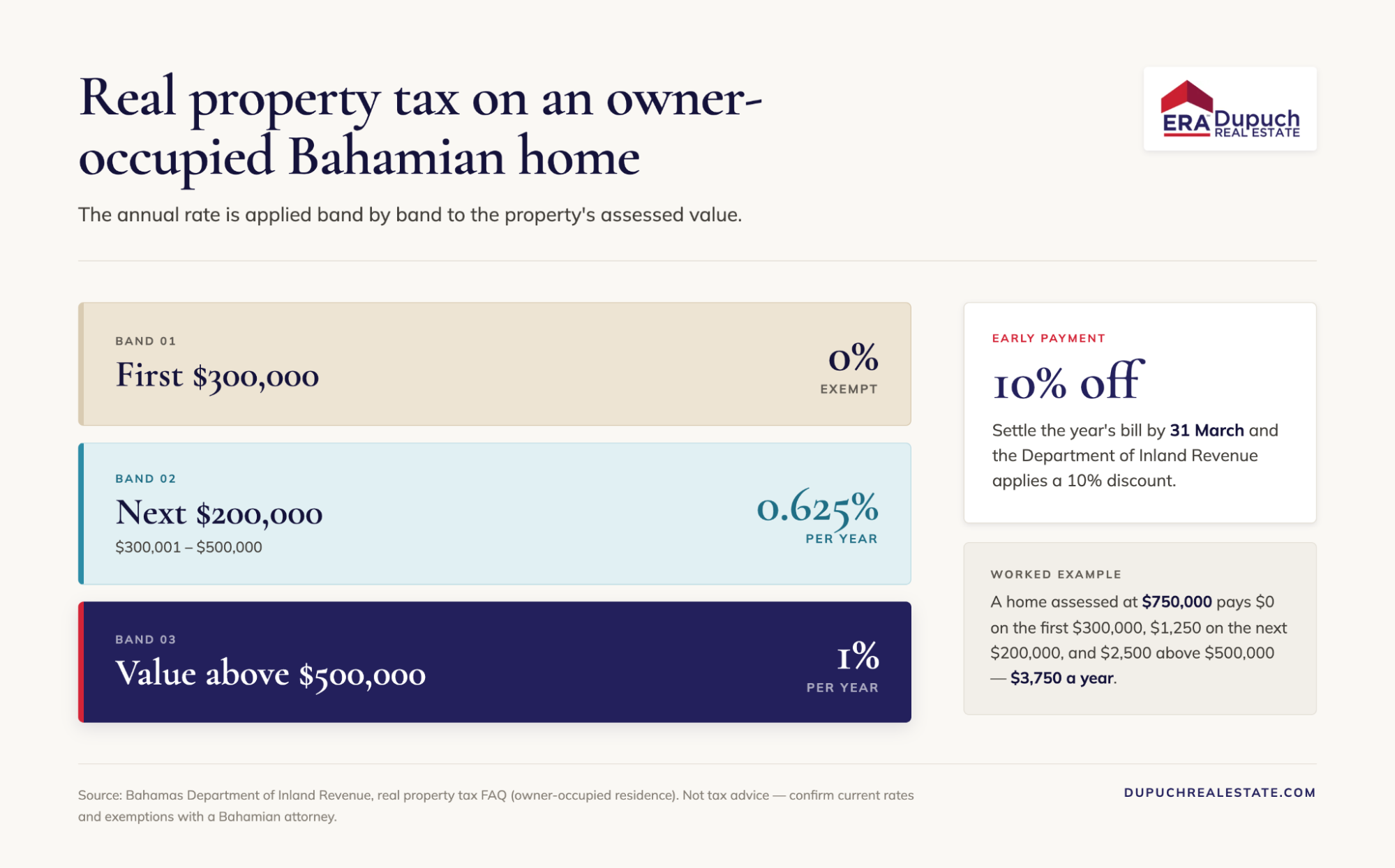
According to the Bahamas Department of Inland Revenue, on an owner-occupied residence the first $300,000 of assessed value is exempt, the next $200,000 is taxed at 0.625%, and value above $500,000 is taxed at 1%. Pay in full by 31 March and you earn a 10% discount for the year.
One thing to note if you plan to rent the place out rather than live in it: non-owner-occupied and rental properties are assessed differently, so the owner-occupied bands won't apply.
Everything You Need to Know: Hurricanes, Insurance, and Storm Surge
Beachfront is the most beautiful place to own, but also the most exposed. This shouldn't scare you off, but it should shape which property you choose and what you budget.
Hurricane and all-perils insurance in The Bahamas typically runs around 2% of the home's value a year, give or take, and what you pay depends on the property: elevation, how it's built, and how close it sits to the water. A concrete-block home on higher ground is cheaper to insure than a beachfront cottage on stilts.
Two details to remember: Hurricane policies carry a deductible that is a percentage of the insured value, often 2% to 5%, which you pay out of pocket before coverage kicks in, so a low premium with a high deductible isn't always the bargain it looks like.
And storm surge and flood are usually excluded from a standard policy. On the beachfront, that's something to really consider, as it typically needs a separate flood policy. If you’re not careful, the water that makes the property special is the risk you're least covered for.
This is where a local team comes in very handy. We can connect you with a Bahamian insurance broker who understands beachfront risk and can tailor coverage to your specific lot.
And if you won't be on the island year-round, our property and estate management services can handle the practical side of storm season, from securing the home before a system to walking through it afterward, so an absent owner isn't managing a storm by phone from another country.
For a fuller look, read what property buyers should know about hurricane season.
You Own the Lot, Not the Beach
Here's something worth knowing before you picture a private strip of sand: in The Bahamas, nobody owns the beach. Under the Bahamas Public Parks and Public Beaches Authority Act and long-standing property law, title to a beachfront property runs to the high-water mark of ordinary tides, and everything seaward of that line is Crown land, open to the public.
In practice, that means "private beach" is rarely literally true. What you're buying is beachfront position and access, the frontage and the walk to the water, not the sand itself, which stays open to the public.
Owners are expected to allow reasonable access and can't lawfully block a public access point. So, just keep that in mind when you’re considering beachfront property.
How Much Is "Cheap" Beachfront, Really?
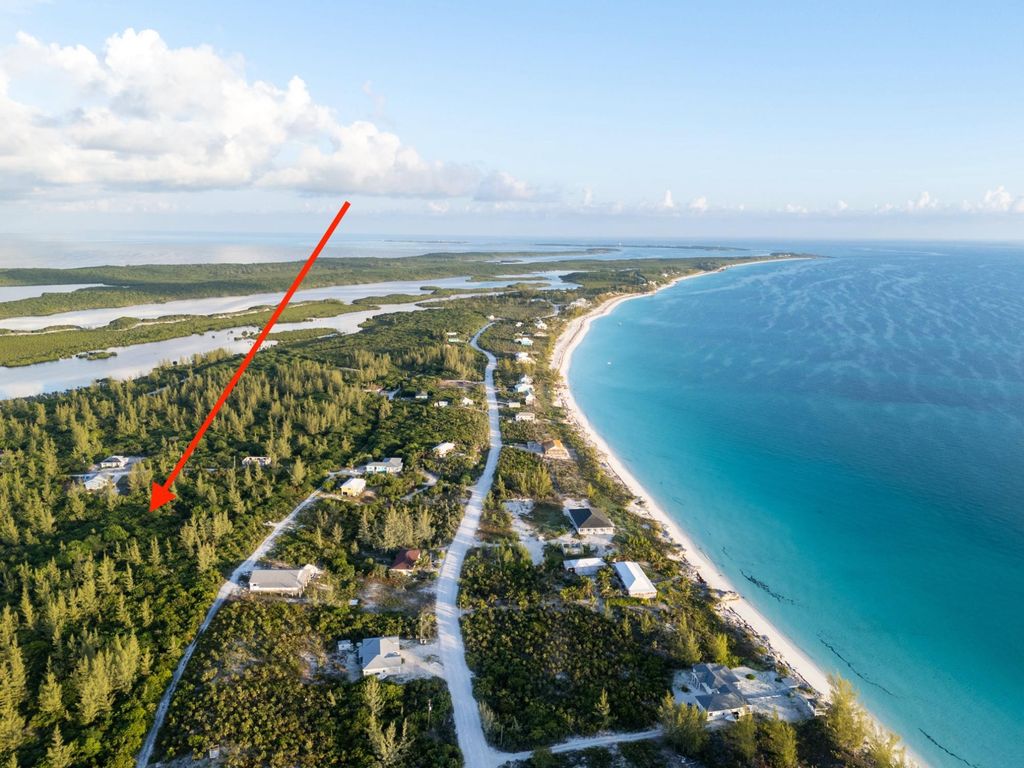
Cheap beachfront property in The Bahamas is something you can find if you know where to look. On some of the Family Islands you can still find beachfront lots in roughly the $20,000 to $50,000 range, like in spots on Cat Island, Long Island, Eleuthera, and Abaco, as we lay out in our guide to the islands.
However, the lot price is typically the cheapest thing about cheap beachfront property. Building on a remote island costs more because materials and labour have to travel to you. Access can mean they have to take a small plane and a boat to reach you.
And the insurance and storm exposure we just covered apply the same way whether the lot cost you $30,000 or $3 million. So the right question isn't "what's the cheapest lot," it's "what's the total cost to build, own, and insure this over the years I'll keep it." If value is what you're after, our guide to the most affordable islands for Bahamas real estate is a good next read.
Which Island Is Right for Your Beachfront Home?
The best island for your beachfront home depends on the trade-off you're willing to make between access and seclusion. There's no true right answer, you just need to assess how you actually want to live.
Nassau and Paradise Island sit at one end. This is where prices are highest, but everything you might want is close by: international flights, hospitals, restaurants, and the deepest pool of buyers when you eventually sell. If you value convenience and liquidity, this is where beachfront makes the most sense.
The Family Islands sit at the other end. Exuma, Eleuthera, Cat Island, Long Island, and Abaco offer more shoreline for your money and far more seclusion, with the trade-off of fewer services and more involved travel. A beachfront home on Eleuthera's pink sand leads to a different life from one a few minutes off a Nassau highway, and the price reflects it.
Matching the island to the person is most of what a good local agent does. Our home buying services cover the islands one by one, and an ERA Dupuch agent can tell you which beachfront pockets on each island fit your budget and your plans. You can start exploring by island: Nassau and New Providence, Paradise Island, Exuma, Eleuthera, and Cat Island.
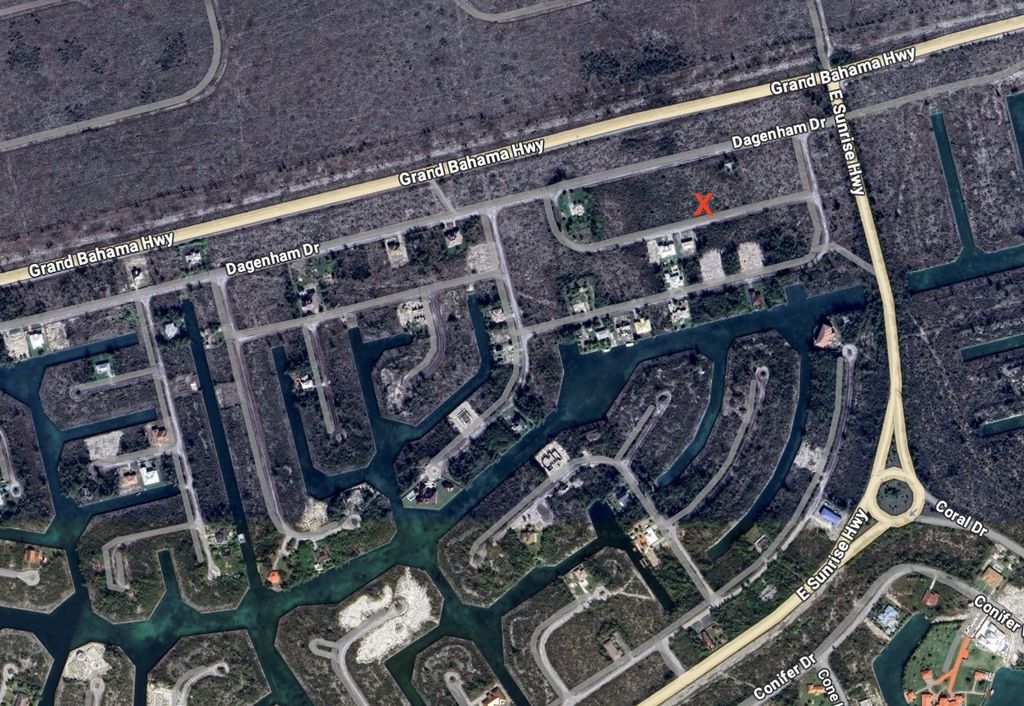
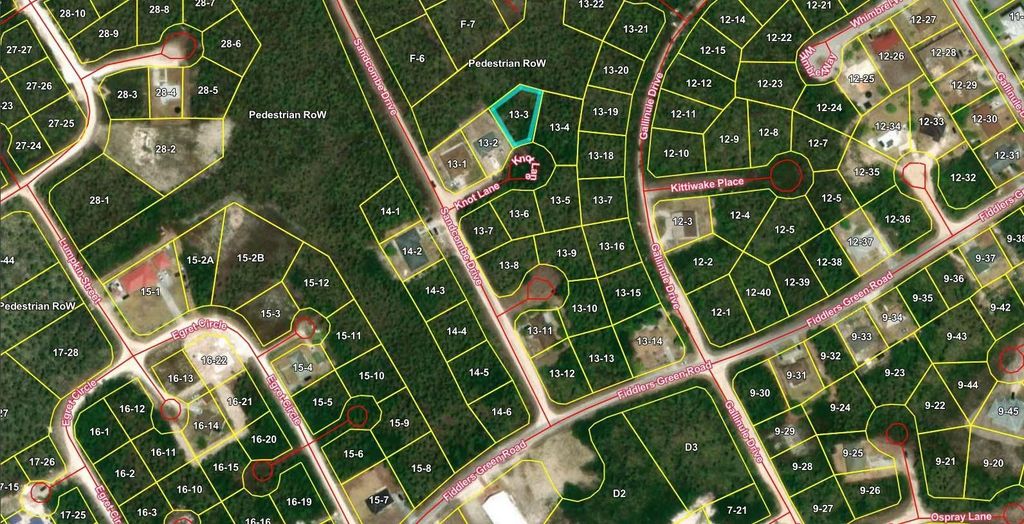
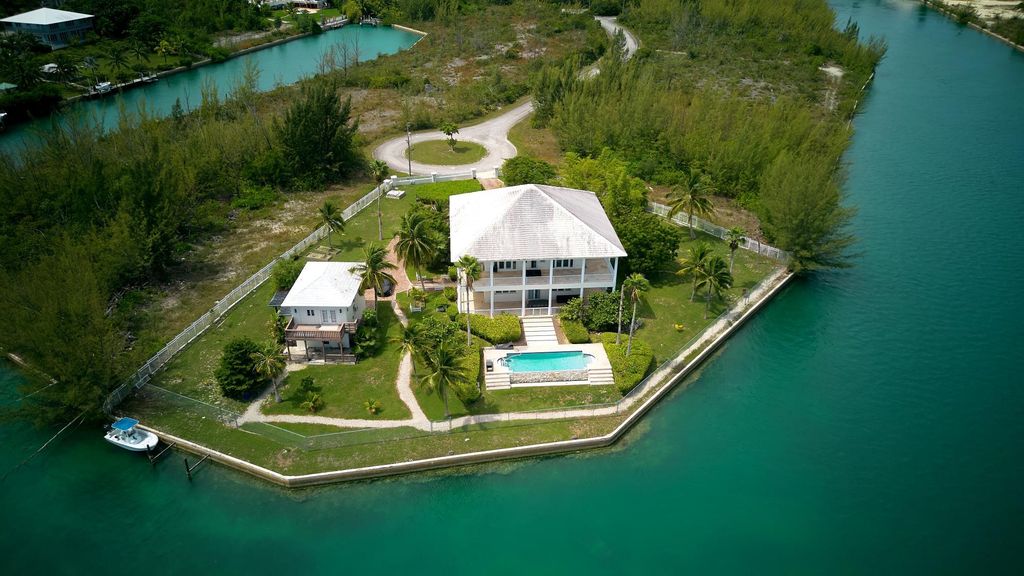
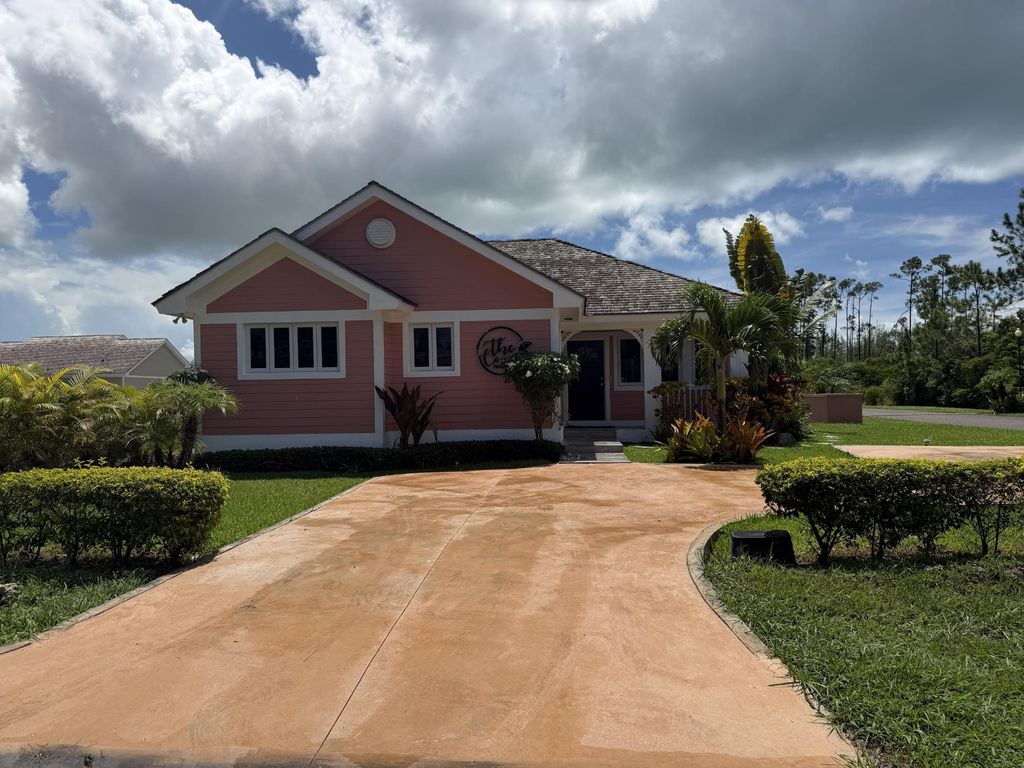
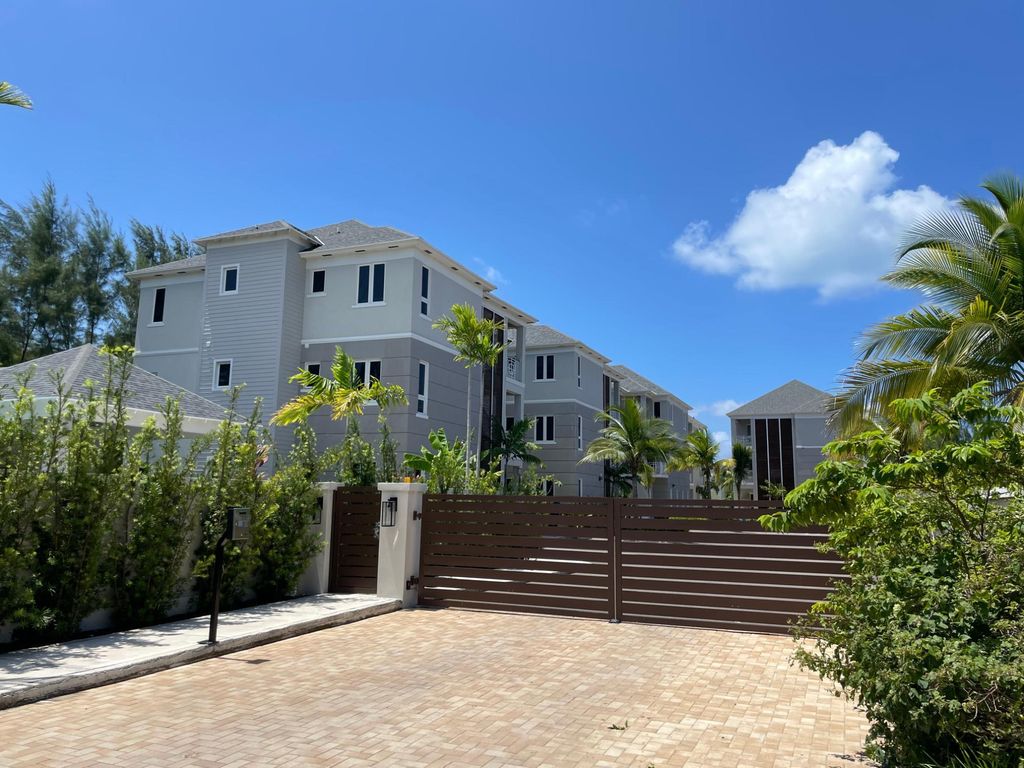
New Listings, Under $100,000
Is Bahamas Beachfront Property a Good Investment?
The strongest part of the investment case for Bahamas beachfront property is the tax position. The Bahamas has no personal income tax, no capital gains tax, and no inheritance tax. For an international buyer, that is a real advantage.
Well-located, well-managed beachfront can earn as a holiday rental, with industry estimates commonly putting vacation-rental yields somewhere in the region of 4% to 7%, and prime-area values have tended to appreciate in recent years. Treat those as ranges and outside estimates,, because occupancy, management, and location can vary returns.
If renting is part of your plan, remember the earlier point: a buy-to-rent property typically requires a permit and is taxed differently from an owner-occupied home. If you do intend to rent, our property management team can handle screening, leases, and rent collection if you so choose.
For where the market sits now, see our Bahamas real estate report.
Beachfront property in The Bahamas is open to you as a foreign buyer, and it can be a great buy when you weigh insurability, island fit, and the full cost of ownership, not just the view.
When you're ready to see what's on the market, explore beachfront by island — Exuma, Eleuthera, Cat Island, Paradise Island, and Nassau and New Providence — or talk with a BREA-licensed ERA Dupuch agent about the islands and budgets that fit you.
FAQs for Bahamas Beachfront Property
What taxes and fees do I pay when buying property in The Bahamas?
As a buyer, plan for a 10% government VAT on the conveyance (non-Bahamian buyers pay the top 10% rate, with the split set by the sales agreement) and legal fees of around 2.5% plus VAT.
The agent's commission is customarily the seller's cost. Then there are annual costs: real property tax, insurance, and upkeep. On an owner-occupied home, the first $300,000 of value is exempt from property tax. Rates change, so confirm current figures with a Bahamian attorney.
How much does it cost to insure a beachfront home in The Bahamas?
Hurricane and all-perils insurance typically runs around 2% of the home's value per year, with beachfront properties at the higher end because of their exposure.
Premiums depend on elevation, construction, and distance from the water. Storm surge and flood are usually excluded from a standard policy and need separate cover, which matters most on beachfront.
What is the cheapest island in The Bahamas to buy beachfront property?
The Family Islands offer the most affordable beachfront, with lots on islands such as Cat Island, Long Island, Eleuthera, and Abaco sometimes available in the $20,000 to $50,000 range.
Keep in mind that a low lot price doesn't always mean a low total cost. Building on remote islands, harder access, and the same insurance requirements can make "cheap" beachfront cost more to own than it first appears.
Posted by Helen Dupuch onEnjoy this blog post? Click here to subscribe for updates
Leave A Comment